
What Slowing Down in Therapy Actually Means

“Slowing down” is a phrase often used in therapy spaces, but many people are not entirely sure what it actually means.
It can sound vague, idealistic, or even frustrating when you are someone carrying anxiety, overwhelm, trauma, grief, or simply the pace of modern life inside your body. Sometimes clients hear the invitation to slow down and think: I don’t even know how to do that. Or: If I slow down, everything I’ve been holding back might catch up with me.
And honestly, that makes sense.
Many of us have learned to move quickly through our lives. To problem solve. To keep functioning. To stay productive. To care for others while quietly moving away from ourselves. Slowing down can feel unfamiliar, vulnerable, or even unsafe at first.
But in therapy, slowing down is rarely about becoming passive or “doing less.” It is about creating enough space to begin hearing ourselves again.
Slowing down helps us notice what has been living underneath
So much of our inner world gets missed when we move too quickly.
The body often speaks softly at first. A tightening in the chest. A subtle feeling of dread. A lump in the throat. Exhaustion. Irritability. Numbness. Longing. Grief.
When life moves fast, we learn to override these signals. We push through. We explain things away. We stay in our thinking minds because it feels more manageable there.
Slowing down in therapy allows us to gently notice what is happening underneath the surface without immediately needing to fix it.
Sometimes this means pausing after a question instead of rushing to answer. Sometimes it means noticing what happens in the body while telling a story. Sometimes it means sitting quietly for a moment after tears arrive instead of moving away from them.
These moments may seem small, but often they are where deeper healing begins.
People sometimes worry that slowing down means endlessly analyzing feelings or staying immersed in pain. But therapeutic slowing down is not about drowning in emotions. It is about building the capacity to be with ourselves in a more supported and compassionate way.
In many forms of trauma and attachment healing, going too fast can actually move us away from meaningful connection with ourselves. We can become flooded, overwhelmed, intellectualized, or disconnected.
Slowing down helps therapy become more relational and embodied rather than performative or rushed.
It allows space for curiosity instead of pressure.
Often, the nervous system needs slowness before it can trust...
Many people arrive in therapy carrying nervous systems that have had to stay vigilant for a very long time.
For some, slowing down may initially feel uncomfortable because fast movement, busyness, overthinking, caretaking, or staying productive have become ways of staying safe.
Therapy is not about taking those strategies away abruptly. Those ways of coping often developed for very good reasons.
Instead, slowing down invites us to become more compassionate toward the parts of ourselves that learned to survive this way.
Over time, with enough safety and support, the nervous system may begin to soften. Not because someone forced it to, but because it no longer has to hold everything alone.
Slowing down can reconnect us to our inner world.
One of the quiet gifts of slowing down is that people often begin to rediscover parts of themselves that have been hidden beneath urgency and survival.
Feelings become clearer.
Needs become more visible.
Boundaries become easier to sense.
Grief that has waited patiently for years may finally have space to move.
Joy, creativity, tenderness, and rest sometimes begin returning too.
This process is rarely linear. And it does not happen through pressure.
Healing often unfolds through moments of being deeply listened to — by another person, and eventually by ourselves.
In a culture that constantly pushes urgency, slowing down can feel radical.
We live in a world that rewards speed, productivity, certainty, and performance. Many people have internalized the belief that their worth is connected to how much they accomplish or how well they hold everything together.
Therapy can become one of the few places where there is permission to pause.
To breathe.
To notice.
To not rush toward an answer.
To allow complexity.
To listen for what is true underneath the noise.
Reach out to slow down: www.vanyalaporte.com
About the Author
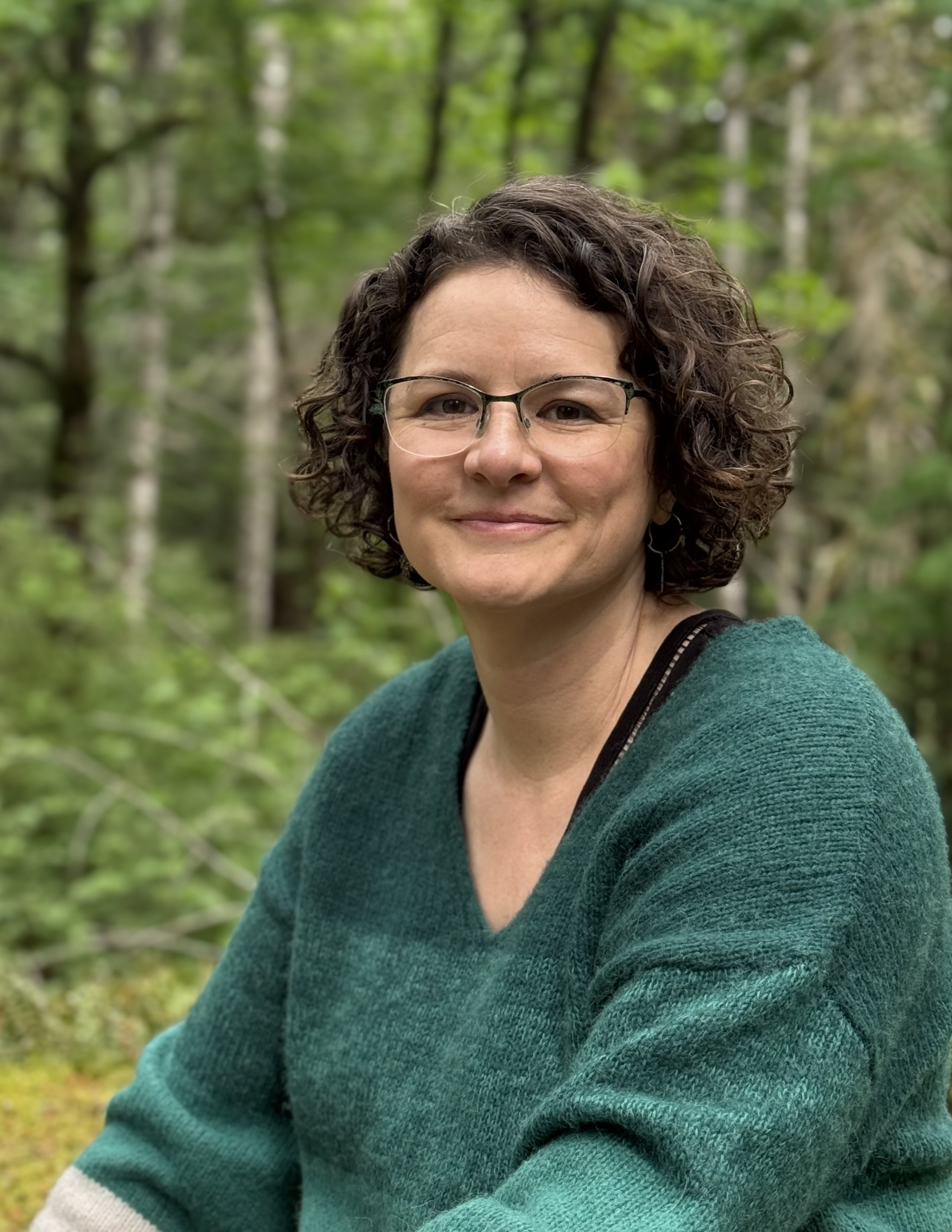
Vanya Laporte is a Registered Clinical Counsellor (RCC), Certified Hakomi Practitioner, and Internal Family Systems therapist based in Victoria, BC. She weaves together mindfulness, somatic therapy, and deep nature connection to help clients find their way back to themselves.
More from the journal

Highly Sensitive and Deeply Feeling: Making Sense of a Nervous System That Notices Everything
What if your sensitivity is not a flaw to be managed, but a way of being wired that has its own intelligence — and its own care needs?

Grief Doesn't Follow a Map: Honouring Loss at Your Own Pace
Grief is not a staircase you climb. It is a landscape you learn to live in. If you are months or even years past a loss and still find it surfacing, there is nothing wrong with you.